A Tribute to the Legacy of Dr. Ruth Pfau
The Ruth Pfau Village Dispensary in Thatta Ghulamka Dhiroka is an enduring symbol of healthcare and compassion in the village. Initially established by Anjuman-e-Falah-e-Aama (AFA) in 1992, the dispensary has been a cornerstone of the community’s health services, providing medical care to villagers and playing an essential role in improving their quality of life. The dispensary was later renamed in honor of Dr. Ruth Pfau, a renowned German physician who devoted her life to the eradication of leprosy in Pakistan.
The Beginning: Dr. Leila Siller’s Contribution
The dispensary was originally set up by Dr. Leila Siller, the daughter of Dr. Senta Siller, one of the key figures behind the Thatta Kedona project. Dr. Leila Siller, a trained medical professional, was instrumental in providing healthcare services to the people of Thatta Ghulamka Dhiroka, where medical facilities were previously scarce. As part of her mother’s broader mission to uplift the village, Dr. Leila envisioned the dispensary as a means to provide accessible and quality healthcare to the villagers, especially women and children.
The Connection to Dr. Ruth Pfau
The renaming of the dispensary to Ruth Pfau Village Dispensary is a heartfelt tribute to the remarkable contributions of Dr. Ruth Pfau, who devoted her life to the treatment and rehabilitation of leprosy patients in Pakistan. Dr. Pfau, who had a brief stay in Karachi, was deeply moved by the plight of leprosy patients in the country and dedicated herself to their care, eventually leading the efforts to eradicate the disease.
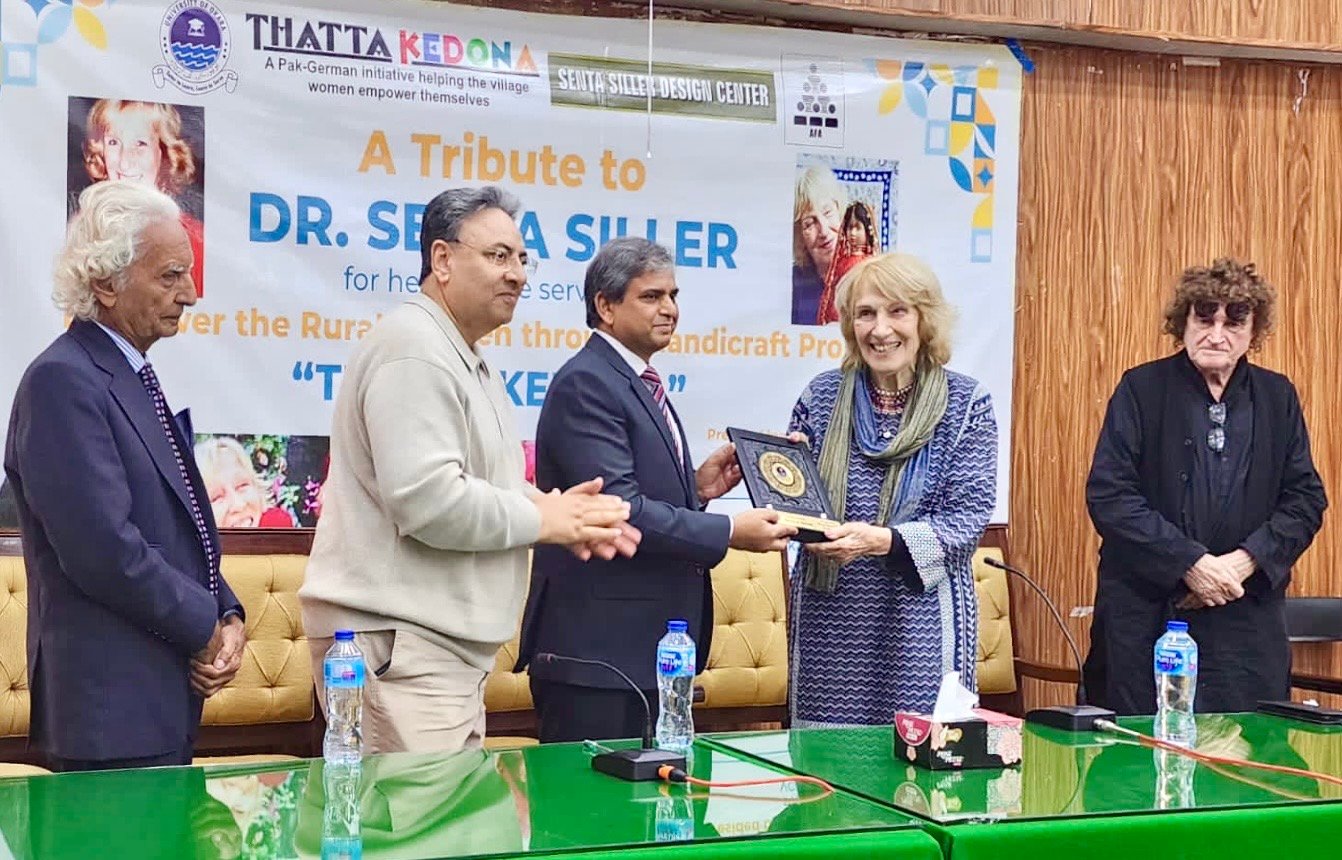
Dr. Senta Siller and Dr. Ruth Pfau shared a strong bond of friendship, both as fellow Germans and as women committed to humanitarian work. Their relationship extended beyond personal friendship to professional collaboration, with Thatta Ghulamka Dhiroka’s dispensary benefiting from the partnership. In fact, some of the products made by leprosy patients at Dr. Ruth Pfau’s center were sold at the dispensary’s stalls, while the handicrafts created by the women of Thatta Ghulamka Dhiroka were also displayed at the leprosy center. This mutual exchange of goods between the two centers was a meaningful way to support both communities and raise awareness about leprosy.
The Structure and Facilities
The Ruth Pfau Village Dispensary is housed in a two-story building, carefully designed to meet the healthcare needs of the community. The top floor consists of two rooms: one is designated for the doctor and the other for the doctor’s assistant. The ground floor has three rooms, where medical consultations and examinations are carried out. Upon entering through the main door, a waiting room is located at the front, providing a comfortable space for patients before their consultation.
The dispensary, in addition to offering general healthcare services, also focuses on maternal and child health, providing vaccinations, routine checkups, and treatment for common illnesses. Over the years, it has played a vital role in reducing health-related issues in the village, preventing outbreaks of contagious diseases, and improving overall healthcare access for the community.
Challenges and the Current Status
Currently, the Ruth Pfau Village Dispensary is temporarily closed due to a lack of financial resources. While the dispensary has played an essential role in the village’s healthcare system, sustaining such services requires constant funding, especially for the maintenance of the building, medical supplies, and personnel. Despite these challenges, the dispensary remains a significant part of the village’s history, and there are hopes that it will be able to reopen in the future with the support of donations and volunteer contributions.
Legacy and Impact
Renaming the dispensary after Dr. Ruth Pfau was not just a gesture of respect for her legacy, but also an acknowledgment of the significant contributions made by Dr. Ruth Pfau to the health and well-being of the people of Pakistan. Her tireless efforts in the field of leprosy eradication and her compassion for those suffering from the disease left an indelible mark on Pakistan’s healthcare landscape. The renaming of the dispensary serves as a living tribute to her work and the close bond she shared with the village of Thatta Ghulamka Dhiroka and its people.
The Ruth Pfau Village Dispensary continues to inspire the community, symbolizing a commitment to health, humanity, and the power of collaboration between individuals and organizations dedicated to making a difference. It remains a beacon of hope for future healthcare initiatives in the village and serves as a reminder of the enduring friendship between Dr. Ruth Pfau and Dr. Senta Siller, two women whose work continues to impact lives in profound ways.
Conclusion
The Ruth Pfau Village Dispensary stands as a symbol of healthcare, compassion, and the enduring legacy of Dr. Ruth Pfau. While facing temporary challenges, its founding principles remain strong—providing essential healthcare services to the people of Thatta Ghulamka Dhiroka, with the aim of improving their well-being and quality of life. As the village continues to grow and evolve, there is hope that this vital facility will once again serve the community, keeping alive the memory and mission of Dr. Ruth Pfau and her lifelong dedication to serving the underprivileged.